To tell the story of the Africville community, we must begin by emphasizing that residents were not illegally squatting on city land. The founding of Africville dates back to the end of the War of 1812, when Black war refugees wished to settle down. The government had promised claims to land for all War of 1812 refugees, however, when the time came, Black refugees were allotted small plots of land in townships that were rocky and infertile (Van Dyk). Parallel to this land-grab, abolitionist Richard Preston assisted in the creation of the African United Baptist Association of Nova Scotia. Though its primary building was the New Horizons Baptist Church, it served as a nexus for Afro-Canadians, encompassing religious, social, political, and charitable efforts (Boyd). Writer George Elliot Clarke remarked,
“The development of black communities in Nova Scotia was less about awful land grants than it was about ex-African Americans determining to build free lives for themselves — together — even if on poor land
”
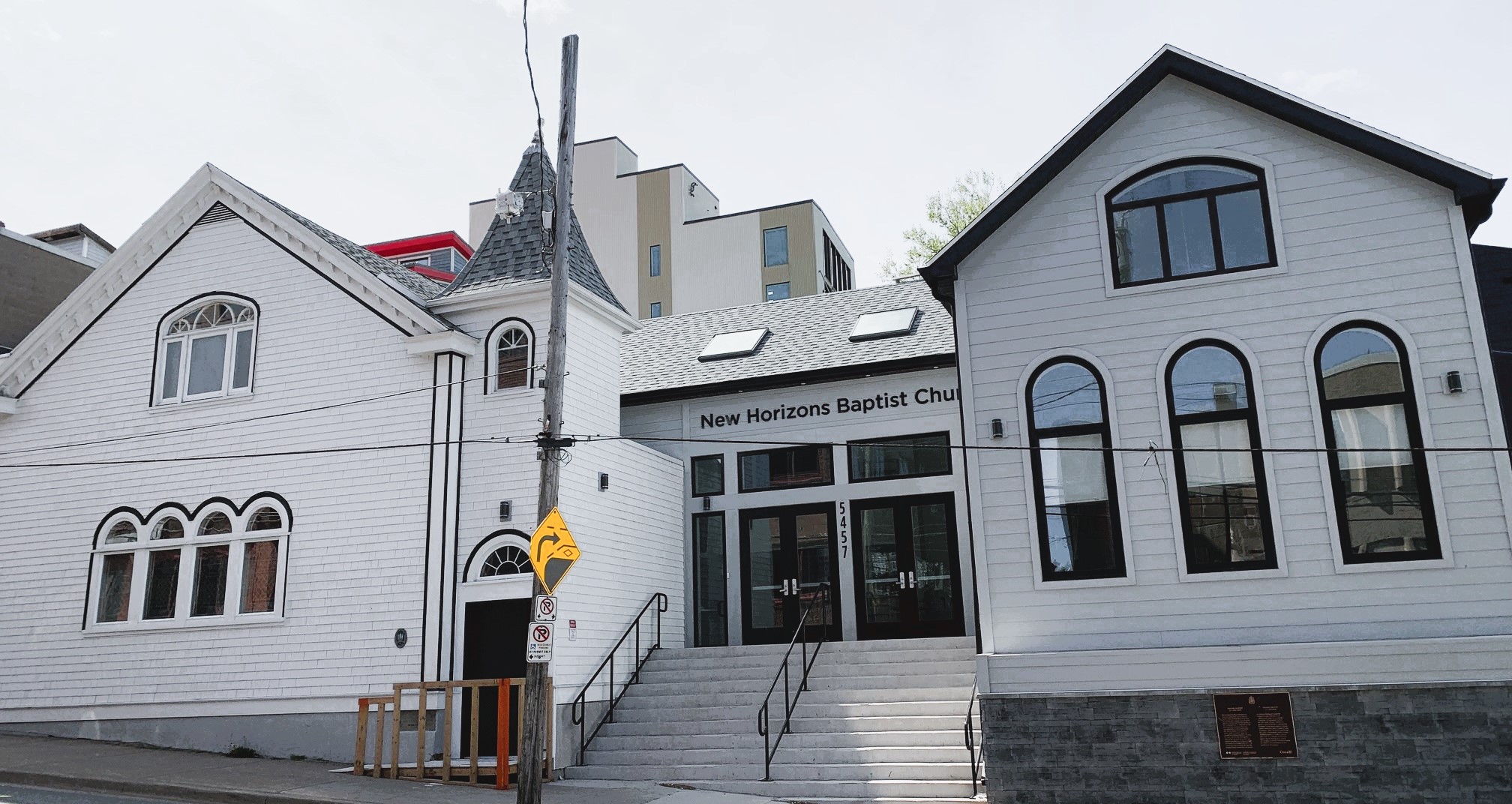
A modern day photo of the New Horizons Baptist Church (New Horizons Baptist Church).
The inhabitable conditions of the government-provided land led the African population to begin considering alternative locations. Though the soil was still not ideal, the Bedford Basin, with its open water for fishing, seemed like the perfect choice. On January 3rd, 1848, William Arnold and William Brown purchased land deeds of approximately six acres each from an estate sale (Porter, 8). Despite evidence of previous inhabitants, scholars use these land deeds to mark the beginnings of the settlement of Africville.
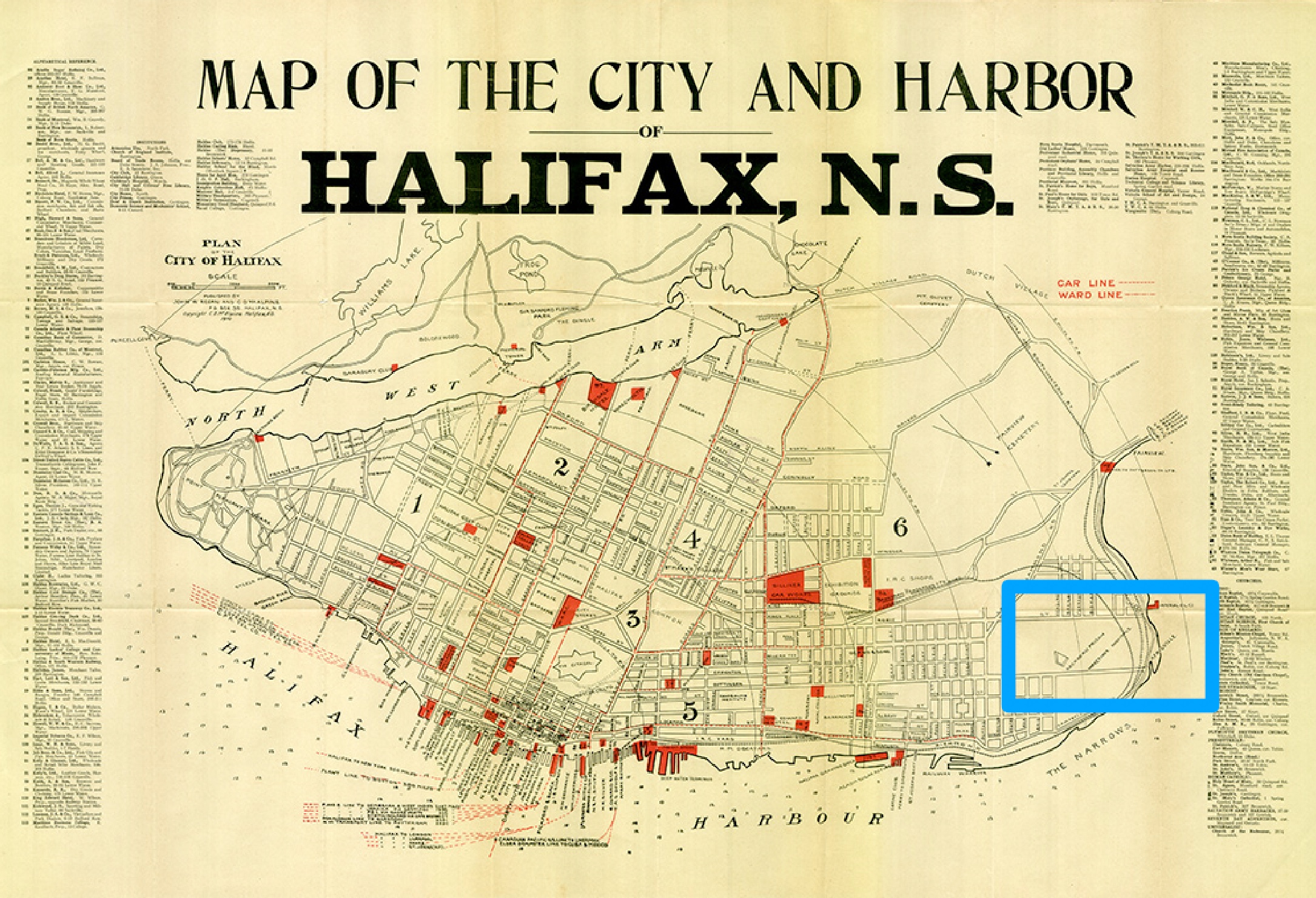
A map of Halifax in 1910, with a blue square around the area of Africville ("Map of the City and Harbour of Halifax, N.S.").
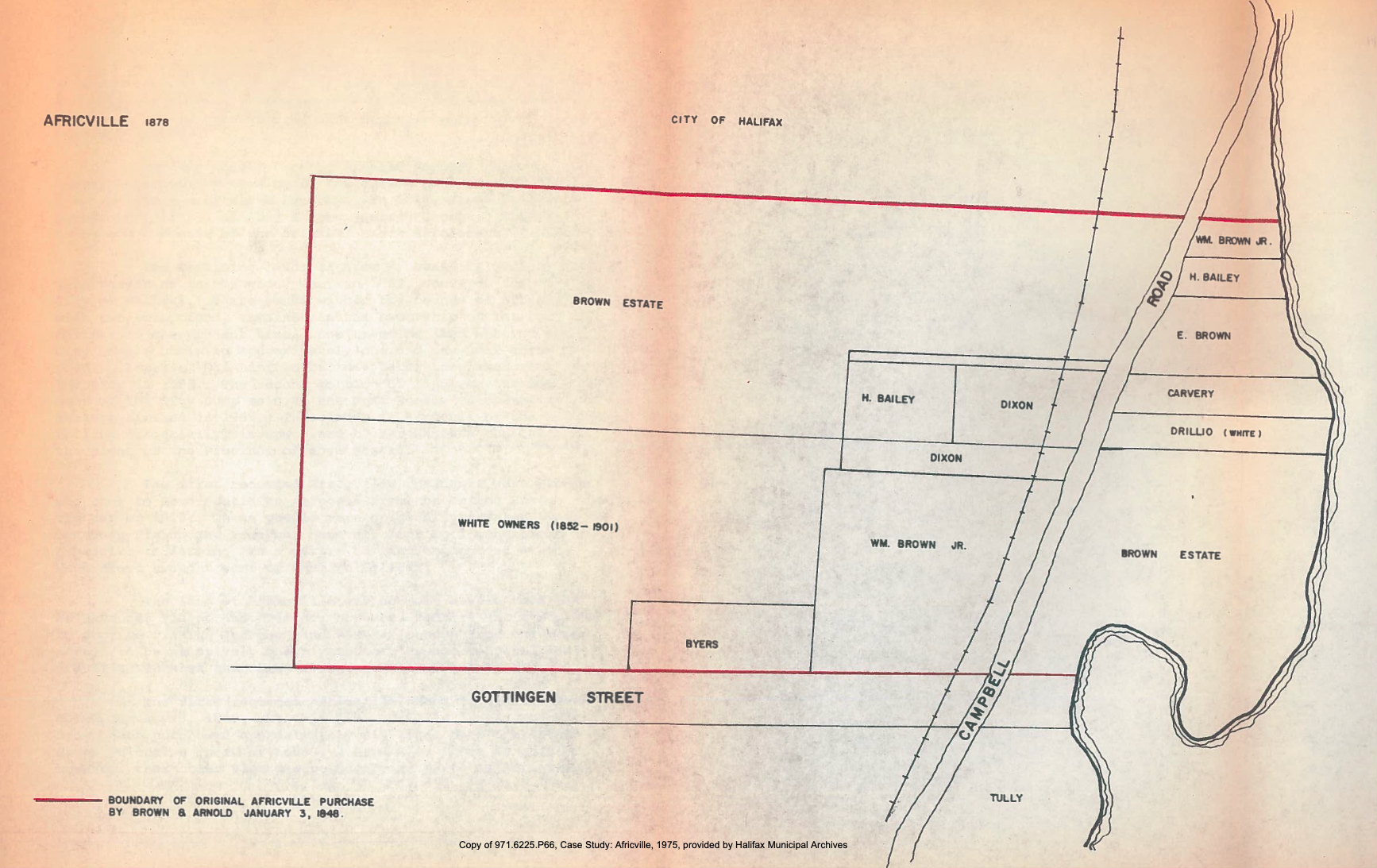
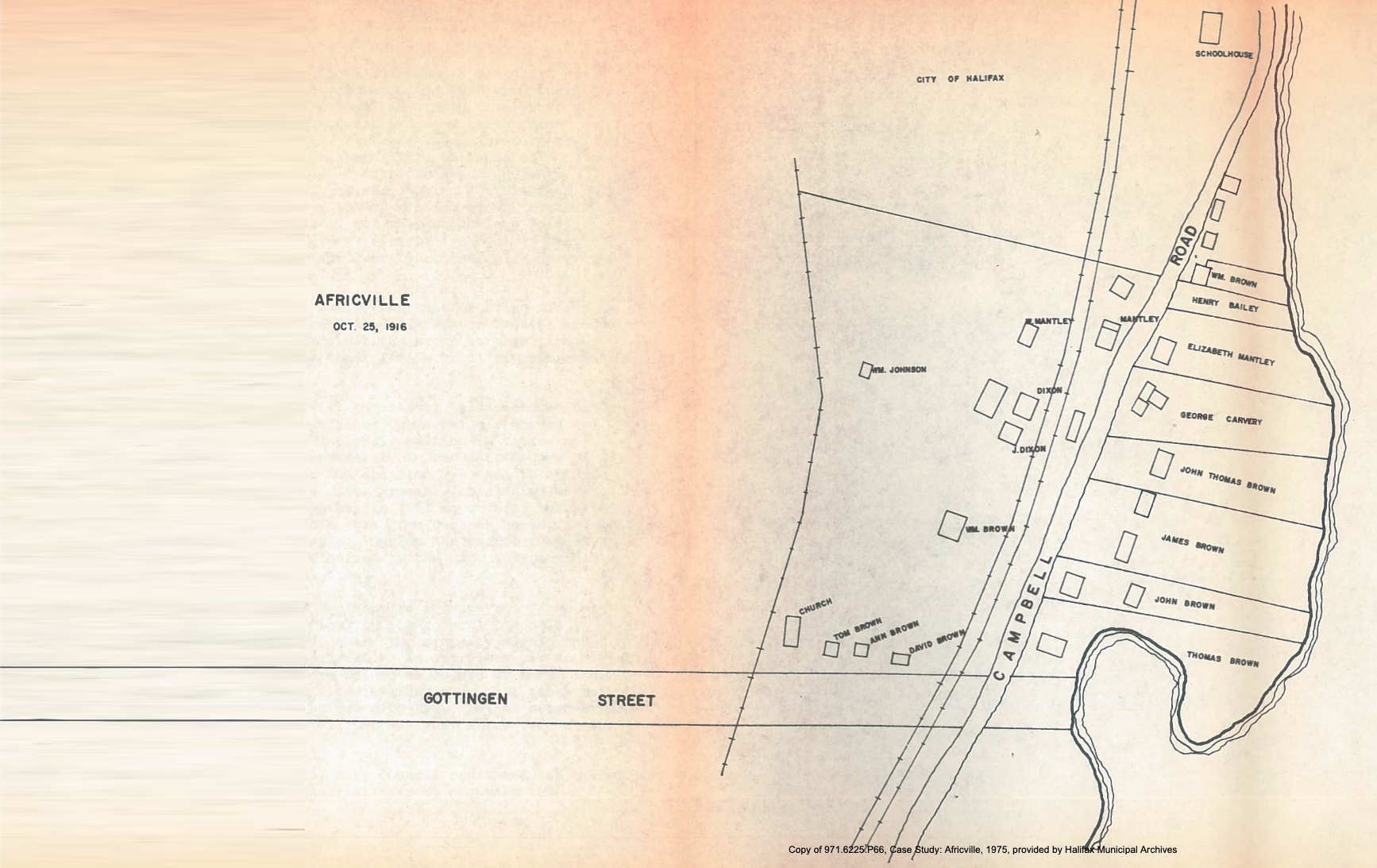
A map of Africville by land ownership and properties, comparing 1878 and 1916 (Porter, 6).